Accredited Industrial Deadweight Tester Calibration Services Saint Louis
Deadweight Tester Calibration in Saint Louis, MO is performed by accredited laboratories to ISO/IEC 17025 acceptance criteria, with documented uncertainty and NIST-traceable results.
Quote Deadweight Tester — Saint Louis
Response within one business day
Service Overview
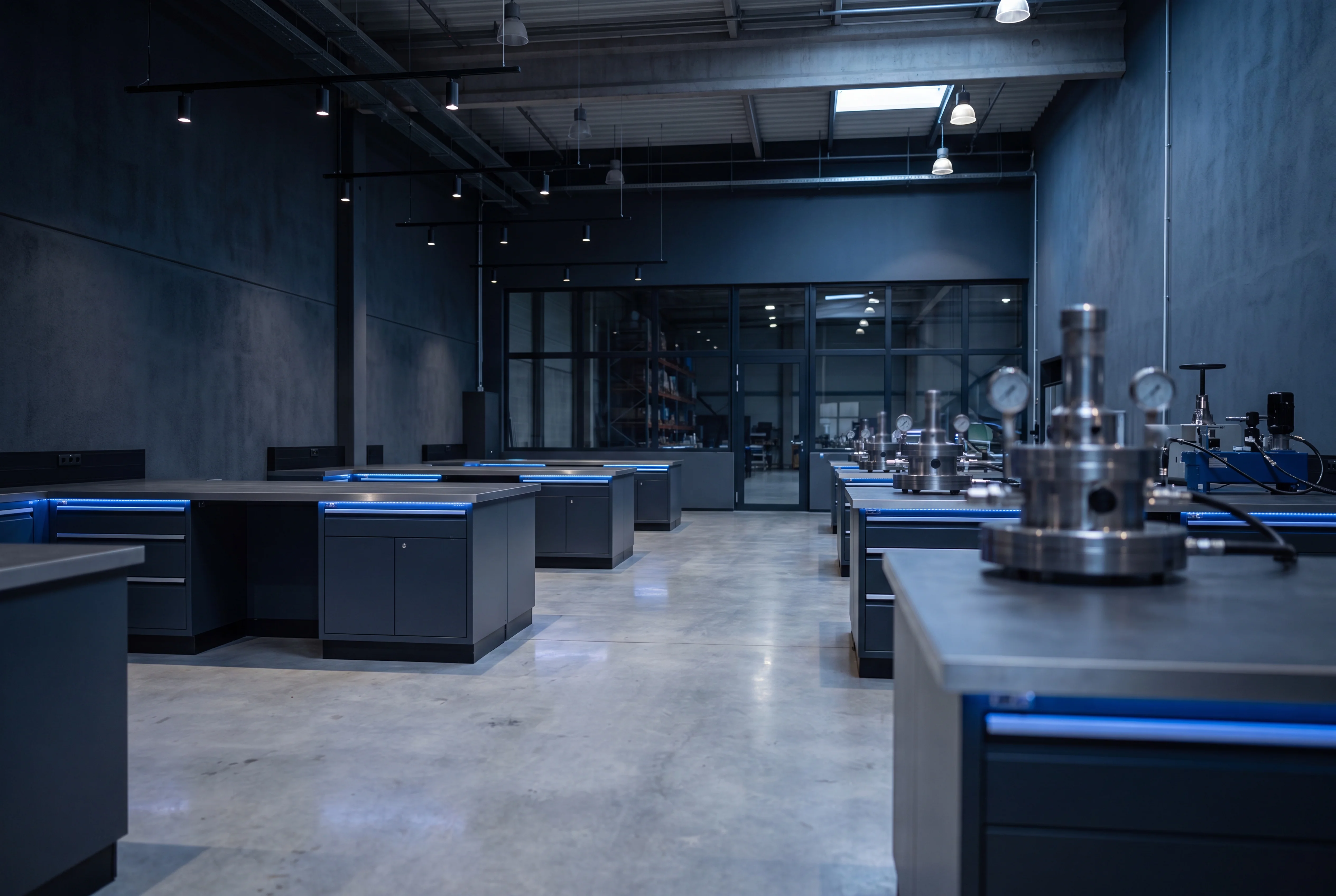
Deadweight Tester Calibration is performed in Saint Louis to recognized acceptance criteria, with documented measurement uncertainty and NIST-traceable results issued on every certificate.
Service Detail
Deadweight Tester in Saint Louis — in-depth reference
Deadweight Tester Application and Industrial Demand in Saint Louis
The industrial ecosystem of Saint Louis, Missouri, relies heavily on primary pressure standards to maintain quality control and safety across diverse manufacturing sectors. Throughout the greater metropolitan area, from the advanced aerospace manufacturing facilities near St. Louis Lambert International Airport to the heavy industrial and chemical processing plants situated along the Mississippi River corridor, deadweight testers serve as the foundational reference for pressure measurement. These devices are crucial for calibrating secondary pressure calibrators, digital test gauges, and pressure transmitters used in high-stakes environments. Aerospace defense contractors in North County require extremely low uncertainty in pressure measurements to validate hydraulic and pneumatic flight systems, mandating the use of highly accurate piston-gauge systems within their internal metrology laboratories. Similarly, fluid control valve manufacturers and industrial automation firms located in Earth City and the Fenton Logistics Park depend on these primary standards to verify the performance specifications of their commercial products before distribution into the global supply chain.
Beyond heavy manufacturing, the dense concentration of pharmaceutical, bioscience, and agricultural technology campuses in the central corridor and Creve Coeur areas generates substantial demand for precise deadweight tester verification. In these highly regulated biomanufacturing environments, pressure variables within bioreactors, cleanrooms, and sterile processing lines must be controlled with absolute certainty. Internal metrology and instrument shops at these facilities utilize deadweight testers to perform routine field calibrations and validations of critical process instrumentation. Because these industries operate under strict regulatory scrutiny, including FDA 21 CFR Part 211 requirements for equipment calibration, the accuracy of the primary standard is paramount. Any deviation or drift in the deadweight tester effective area or mass set can propagate measurement errors throughout an entire production batch, potentially leading to catastrophic compliance failures, quarantined products, or costly production downtime. Consequently, rigorous and documented verification of these master instruments is deeply integrated into the operational protocols of St. Louis life science enterprises.
Metrological Traceability and Compliance for Primary Pressure Standards
The verification and validation of deadweight testers require strict adherence to international metrological principles and accredited calibration methodologies. As primary standards, the calibration of these instruments is governed by frameworks such as ISO/IEC 17025, which dictates the technical competence and quality management system requirements for testing and calibration laboratories. The core methodology for establishing the accuracy of a piston-cylinder assembly involves a cross-float process against an equal or superior reference standard. This procedure determines the precise effective area of the piston at various operational pressures. For instruments deployed in eastern Missouri, a critical component of the calibration process is the calculation and application of local gravity parameters. The acceleration of gravity in Saint Louis is approximately 9.800 meters per second squared, which differs significantly from standard international gravity. Because a deadweight tester relies on the physical mass of its weights exerting downward force, mass sets must be precisely trimmed, or mathematical corrections must be applied during operation, to ensure the pressure generated is completely accurate at the exact latitude and elevation of the specific St. Louis facility.
Comprehensive deadweight tester calibration also requires meticulous compensation for multiple environmental and physical variables. Calibration protocols must account for the local air buoyancy acting on the mass set, the surface tension of the operational fluid in hydraulic units, and the thermal expansion coefficients of the piston and cylinder materials, which are typically fabricated from tungsten carbide or specialized steel alloys. Documentation must provide unbroken traceability to the National Institute of Standards and Technology (NIST) or a recognized equivalent National Metrology Institute. Calibration certificates generated under these conditions detail the exact effective area, the true mass of each weight, and the calculated measurement uncertainty at specific pressure intervals. These documents are essential for St. Louis manufacturers aiming to satisfy the stringent audit requirements of quality management systems such as AS9100 for aerospace engineering or ISO 9001 for general manufacturing.
Acceptance criteria and tolerance grades for deadweight testers are established by original equipment manufacturer specifications or through international metrology guidelines such as EURAMET cg-3. By assessing both the physical geometry of the piston-cylinder unit and the metrological stability of the associated masses - often referencing OIML R 111-1 for mass tolerances - the operational integrity of the primary standard is verified. This ensures the equipment maintains an uncertainty profile frequently measured in parts per million. Routine verification schedules, driven by historical drift analysis and the specific usage frequency within regional manufacturing environments, ensure that St. Louis industrial sectors maintain an uncompromised chain of metrological traceability from the factory floor all the way back to national physical standards.
Related Services
Pressure Gauge Calibration
View in Saint Louis ↗ RelatedDigital Pressure Gauge Calibration
View in Saint Louis ↗ RelatedManometer Calibration
View in Saint Louis ↗ RelatedPressure Transmitter, Transducer & Sensor Calibration
View in Saint Louis ↗ RelatedPressure Switch & Relief Valve Calibration
View in Saint Louis ↗ RelatedLeak Tester Calibration
View in Saint Louis ↗Request deadweight tester in Saint Louis.
Submit instrument details to receive an itemized quote within one business day. NIST-traceable results, documented for audit and compliance.