Accredited Industrial Pressure Transmitter, Transducer & Sensor Calibration Services Saint Louis
Pressure Transmitter, Transducer & Sensor Calibration in Saint Louis, MO is performed by accredited laboratories to ISO/IEC 17025 acceptance criteria, with documented uncertainty and NIST-traceable results.
Quote Pressure Transmitter, Transducer & Sensor — Saint Louis
Response within one business day
Service Overview
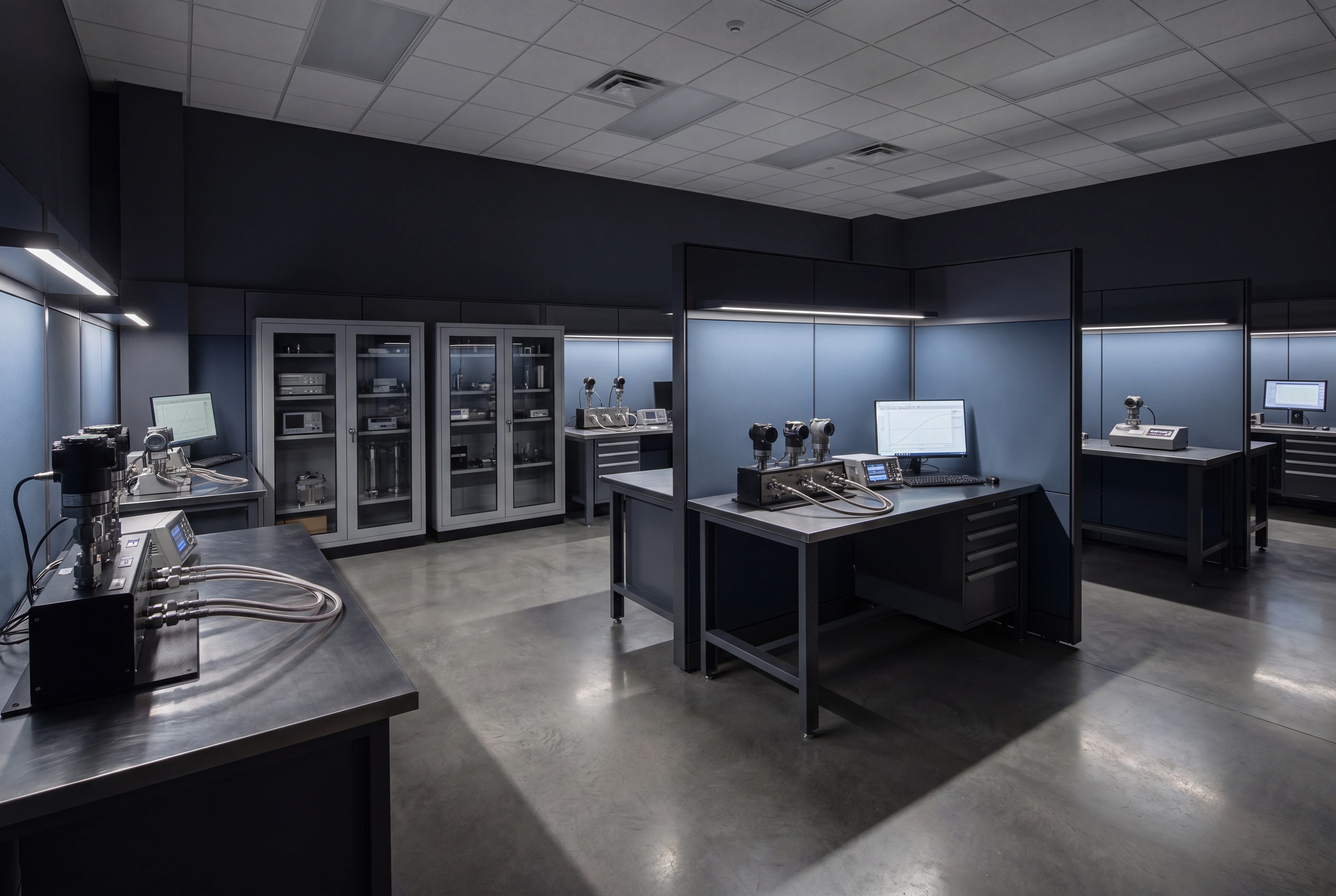
Pressure Transmitter, Transducer & Sensor Calibration is performed in Saint Louis to recognized acceptance criteria, with documented measurement uncertainty and NIST-traceable results issued on every certificate.
Service Detail
Pressure Transmitter, Transducer & Sensor in Saint Louis — in-depth reference
Industrial Drivers for Pressure Instrumentation Accuracy in Saint Louis
Local demand for pressure transmitter, transducer, and sensor calibration in Saint Louis, Missouri, is driven by a dense network of aerospace, biopharmaceutical, and heavy manufacturing facilities. At defense and aerospace engineering sites anchored near St. Louis Lambert International Airport, including expansive testing environments operated by Boeing, pressure transducers are integral to the verification of hydraulic flight control assemblies, pneumatic systems, and aerodynamic structures. These applications require absolute and differential pressure sensors capable of capturing dynamic pressure changes with extreme precision. Structural testing and advanced fluid dynamic evaluations conducted in this northern St. Louis County corridor rely heavily on calibrated transducers to validate flight-hardware performance against stringent military and commercial aviation tolerances.
Further west along the Interstate 64 technology corridor, encompassing the Cortex Innovation Community and massive research campuses in Chesterfield and Creve Coeur, life sciences and agritech operations generate continuous requirements for sanitary pressure measurement. Facilities managed by organizations such as Pfizer, Bayer Crop Science, and MilliporeSigma utilize specialized flush-diaphragm pressure transmitters throughout their bioprocessing infrastructure. Bioreactors, chromatography skids, and continuous filtration systems demand highly accurate pressure monitoring to maintain sterile boundaries and optimize production yield. The density of these cleanroom environments creates a constant necessity for specialized calibration protocols that ensure zero cross-contamination while verifying transducer accuracy.
Additionally, along the Mississippi River industrial footprint and in suburban manufacturing hubs like Wentzville, automated assembly plants and large-scale brewing operations depend on robust industrial pressure sensors. Historic facilities such as the Anheuser-Busch complex and various automotive assembly lines utilize pressure transmitters to govern fluid dynamics, pneumatic robotics, and vessel pressurization. The regional supply chain requires routine verification of these sensors to prevent localized process drift, which can lead to batch failure or mechanical downtime in high-volume production environments.
Regulatory Frameworks and Metrological Methodologies
The technical protocols governing pressure transmitter, transducer, and sensor calibration are dictated by rigorous international standards and sector-specific compliance mandates. In the St. Louis biopharmaceutical sector, calibration procedures must strictly satisfy the requirements of FDA 21 CFR Part 211, which dictates adherence to Current Good Manufacturing Practices (cGMP) for finished pharmaceuticals. Instrumentation deployed in these regulated process environments must demonstrate unbroken, documented traceability to the National Institute of Standards and Technology (NIST). Calibration routines involve verifying both the mechanical pressure input and the corresponding electrical output signal - typically a 4-20mA loop or a digital HART protocol transmission. This ensures that the entire measurement loop performs within defined acceptance criteria, which frequently dictate tolerance grades tighter than 0.1 percent of the full-scale range.
For aerospace and advanced manufacturing applications operating under ISO/IEC 17025 and AS9100 quality management systems, the calibration methodology assesses the device under test across its complete operational spectrum. High-accuracy automated pressure controllers and deadweight testers function as primary reference standards to generate precise physical test pressures. During the evaluation process, critical performance parameters such as linearity, zero-shift, span error, and hysteresis are systematically quantified. For differential pressure transmitters widely utilized in St. Louis cleanroom HVAC controls and complex flow measurement systems, procedures must also account for static line pressure effects, requiring specialized multi-valve manifold configurations during testing.
The culmination of these verification processes is the generation of comprehensive calibration records required for regulatory compliance and operational audits. This technical documentation details the specific reference standards utilized, ambient environmental conditions during testing, calculated measurement uncertainties, and comprehensive "as-found" and "as-left" data points. By maintaining strict adherence to these documentation requirements, facilities throughout the Greater St. Louis region ensure their pressure sensing instrumentation remains fully compliant with federal oversight mandates, securing process safety and mitigating the risk of costly out-of-tolerance deviations.
Related Services
Pressure Gauge Calibration
View in Saint Louis ↗ RelatedDigital Pressure Gauge Calibration
View in Saint Louis ↗ RelatedManometer Calibration
View in Saint Louis ↗ RelatedPressure Switch & Relief Valve Calibration
View in Saint Louis ↗ RelatedLeak Tester Calibration
View in Saint Louis ↗ RelatedPiston Gauge Calibration
View in Saint Louis ↗Request pressure transmitter, transducer & sensor in Saint Louis.
Submit instrument details to receive an itemized quote within one business day. NIST-traceable results, documented for audit and compliance.