Accredited Industrial Leak Tester Calibration Services Saint Louis
Leak Tester Calibration in Saint Louis, MO is performed by accredited laboratories to ISO/IEC 17025 acceptance criteria, with documented uncertainty and NIST-traceable results.
Quote Leak Tester — Saint Louis
Response within one business day
Service Overview
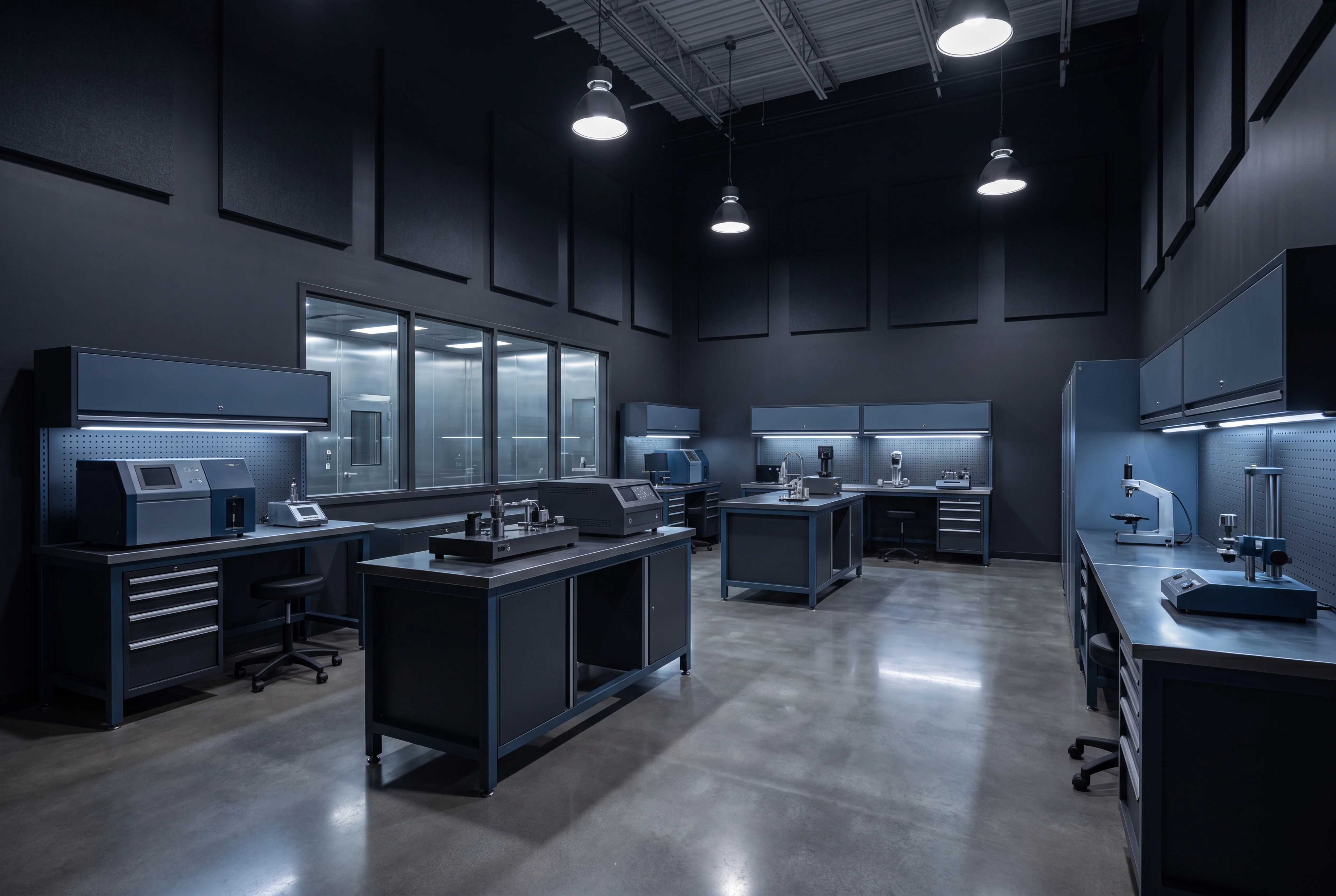
Leak Tester Calibration is performed in Saint Louis to recognized acceptance criteria, with documented measurement uncertainty and NIST-traceable results issued on every certificate.
Service Detail
Leak Tester in Saint Louis — in-depth reference
Local Demand for Leak Tester Calibration in Saint Louis, Missouri
The Greater Saint Louis metropolitan area stands as a primary industrial and manufacturing hub in the Midwest, anchoring key supply chains across Missouri and southern Illinois. This dense concentration of advanced engineering and production facilities creates a continuous demand for precise leak tester calibration. High-precision testing systems are deployed heavily within the Hazelwood Tradeport and Earth City Industrial Park, where packaging manufacturers, automotive component suppliers, and aerospace operations utilize pressure and vacuum decay testers to verify hermetic integrity. Aerospace manufacturing situated near St. Louis Lambert International Airport, along with light assembly facilities in the Fenton Logistics Park, rely on calibrated mass extraction and pressure decay systems to meet rigorous quality benchmarks. Within these industrial corridors, components such as hydraulic valves, fuel line connections, and electronic enclosures must undergo stringent air leak testing before deployment, where even minor calibration drift in an instrument's transducer can compromise seal evaluation and lead to downstream failures.
Furthermore, the Saint Louis region has experienced significant growth in its life sciences and medical device manufacturing sectors, notably within the Cortex Innovation Community and outlying corporate centers in St. Charles County and Bridgeton. Facilities producing sterile medical packaging, catheters, and intravenous delivery sets are legally required to validate their barrier systems. In these highly regulated environments, leak testing is a critical safety mandate, ensuring that sterile packaging remains impervious to microbial ingress throughout its shelf life. The localized concentration of these sectors demands that pressure calibration services maintain a deep understanding of local manufacturing conditions, including thermal fluctuations in large-scale warehouses which can alter decay curves and require precise calibration of master leak standards to ensure correct pass-fail separation.
Technical and Regulatory Compliance Context
Leak tester calibration is governed by precise international standards and federal regulations that ensure testing repeatability and absolute measurement traceability. In the medical device and pharmaceutical packaging sectors, compliance with FDA 21 CFR Part 211 is mandatory for sterile barrier validation. To satisfy these regulatory frameworks, leak test procedures frequently reference ASTM F2338 for non-destructive vacuum decay, ASTM F2095 for pressure decay leak testing of flexible packaging, and ASTM F2096 for internal pressurization bubble emission. Calibrating the instrumentation behind these tests requires direct, unbroken traceability to the National Institute of Standards and Technology (NIST) to guarantee the accuracy of starting pressures and the resolution of pressure transducers measuring minute delta pressure drops.
Under the ISO/IEC 17025 standard, calibration laboratories must establish documented measurement uncertainties for both pressure decay and flow-based leak testing systems. Standard calibration procedures require a multi-step sequence that includes establishing zero leak setpoints using non-leaking master parts, followed by verification using certified leak standards that mimic the exact allowable leakage rate. For instance, packages requiring compliance with IP67 waterproofing must be validated using calibrated leak standards that flow precise standard cubic centimeters per minute (sccm) at specific pressures. Maintaining a 3:1 separation ratio between a known leaking part and a non-leaking master part is standard practice to prevent false positives or false negatives during automated production runs.
In addition to pressure and vacuum decay systems, tracer gas methods using helium or forming gas require specialized reference leak standards calibrated in accordance with ISO 20486. These instruments are highly sensitive to atmospheric changes and require precise ambient control during calibration. To maintain compliance within Missouri's manufacturing sectors, annual calibration intervals are typical, though high-volume automated lines in Fenton and Hazelwood often implement semi-annual or quarterly validation schedules. This systematic calibration approach ensures that the conversion from physical pressure loss over time to an equivalent volumetric leak rate remains precise, legally defensible, and fully compliant with all applicable national and international standards.
Related Services
Pressure Gauge Calibration
View in Saint Louis ↗ RelatedDigital Pressure Gauge Calibration
View in Saint Louis ↗ RelatedManometer Calibration
View in Saint Louis ↗ RelatedPressure Transmitter, Transducer & Sensor Calibration
View in Saint Louis ↗ RelatedPressure Switch & Relief Valve Calibration
View in Saint Louis ↗ RelatedPiston Gauge Calibration
View in Saint Louis ↗Request leak tester in Saint Louis.
Submit instrument details to receive an itemized quote within one business day. NIST-traceable results, documented for audit and compliance.