Accredited Industrial Differential Pressure & Magnehelic Gauge Calibration Services Saint Paul
Differential Pressure & Magnehelic Gauge Calibration in Saint Paul, MN is performed by accredited laboratories to ISO/IEC 17025 acceptance criteria, with documented uncertainty and NIST-traceable results.
Quote Differential Pressure & Magnehelic Gauge — Saint Paul
Response within one business day
Service Overview
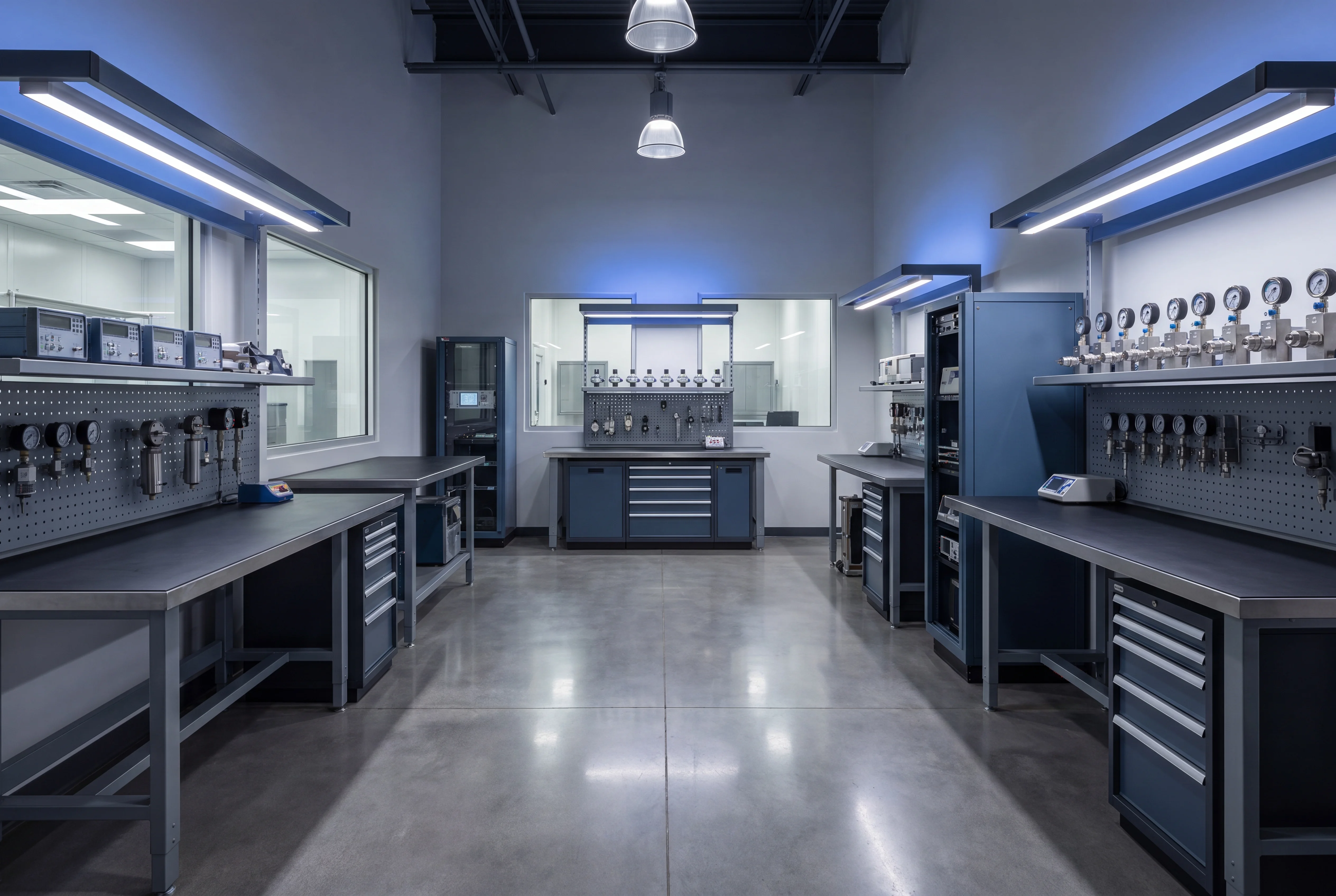
Differential Pressure & Magnehelic Gauge Calibration is performed in Saint Paul to recognized acceptance criteria, with documented measurement uncertainty and NIST-traceable results issued on every certificate.
Service Detail
Differential Pressure & Magnehelic Gauge in Saint Paul — in-depth reference
Local Demand for Differential Pressure & Magnehelic Gauge Calibration in Saint Paul
The advanced manufacturing and biotechnology corridors within Saint Paul generate sustained requirements for differential pressure measurement and Magnehelic gauge calibration. Facilities distributed across the Midway Industrial District and the Energy Park area rely heavily on low-pressure pneumatic instrumentation to maintain controlled environments. In the medical device and biomedical engineering sectors that anchor Ramsey County's industrial output, differential pressure gauges serve as critical components for cleanroom monitoring, biological safety cabinet operation, and filtration system performance verification. Precise pressure differentials are mandatory to prevent cross-contamination between adjacent manufacturing suites, making the accuracy of wall-mounted Magnehelic gauges a fundamental operational parameter. The concentration of life sciences research and development facilities, along with pharmaceutical compounding centers situated near the Mississippi River corridor, necessitates stringent environmental monitoring. Even minor deviations in room pressurization can result in batch failures, compromised sterility, or regulatory non-compliance during audits.
Furthermore, the broader industrial base in Saint Paul, including precision coating operations and heavy equipment assembly in the Riverview Industrial Park, utilizes differential pressure instrumentation to manage industrial ventilation and particulate extraction systems. Within these manufacturing settings, the routine calibration of mechanical dial gauges and digital differential pressure transmitters ensures that air handling units operate within designated specifications, mitigating occupational exposure to airborne particulates and volatile organic compounds. Environmental conditions in Minnesota, marked by extreme seasonal temperature and humidity fluctuations, place additional strain on HVAC infrastructure. These wide ambient variations increase the baseline drift rate of sensitive pressure diaphragms located near exterior walls or on rooftop air handling units, thereby necessitating rigorous and documented calibration intervals to maintain facility equilibrium and process integrity.
Technical and Compliance Context for Differential Pressure Instrumentation
Verification of differential pressure instruments requires strict adherence to specific metrological protocols and regulatory frameworks, particularly given the extremely low pressure ranges typically measured in facility HVAC systems, often spanning from 0.1 to 5.0 inches of water column or the equivalent in Pascals. In Saint Paul's prominent life sciences sector, compliance with FDA 21 CFR Part 211 dictates that instruments utilized for environmental control in Good Manufacturing Practice environments must be calibrated at suitable intervals against standards traceable to the National Institute of Standards and Technology. Calibration procedures for both Magnehelic gauges and electronic differential pressure transmitters involve generating precise pneumatic pressures using high-resolution automated pressure controllers, precision inclined manometers, or low-pressure primary standards. The calibration process must evaluate the instrument for hysteresis, repeatability, and linearity across its full operational span, ensuring that mechanical linkages and sensing diaphragms respond proportionally to micro-pressure variations. Importantly, mechanical gauges must be calibrated in their exact mounting orientation to account for gravitational effects on the internal indicator mechanisms.
Cleanroom operations and controlled environments are directly governed by ISO 14644 standards, which require documented, metrologically sound verification of pressure cascades between classified zones. If a differential pressure gauge is found operating outside of its specified tolerance during a routine verification cycle, a reverse traceability analysis is frequently required to assess the potential impact on product quality or environmental integrity over the preceding operational period. Traceability to national standards and execution under an ISO/IEC 17025 accredited quality system provide the necessary metrological confidence for local plant managers and quality assurance directors. Acceptance criteria for analog Magnehelic gauges generally align with manufacturer specifications, typically ranging from 2% to 4% of full scale depending on the specific model and range, while digital transmitters require tighter tolerances and are subjected to multi-point verification across both positive and negative pressure scales. For facilities operating within Ramsey County's regulatory jurisdiction, maintaining a robust, documented calibration program for differential pressure instrumentation remains a non-negotiable element of ongoing facility validation.
Related Services
Pressure Gauge Calibration
View in Saint Paul ↗ RelatedDigital Pressure Gauge Calibration
View in Saint Paul ↗ RelatedManometer Calibration
View in Saint Paul ↗ RelatedPressure Transmitter, Transducer & Sensor Calibration
View in Saint Paul ↗ RelatedPressure Switch & Relief Valve Calibration
View in Saint Paul ↗ RelatedLeak Tester Calibration
View in Saint Paul ↗Request differential pressure & magnehelic gauge in Saint Paul.
Submit instrument details to receive an itemized quote within one business day. NIST-traceable results, documented for audit and compliance.