Accredited Industrial Pressure Transmitter, Transducer & Sensor Calibration Services Saint Paul
Pressure Transmitter, Transducer & Sensor Calibration in Saint Paul, MN is performed by accredited laboratories to ISO/IEC 17025 acceptance criteria, with documented uncertainty and NIST-traceable results.
Quote Pressure Transmitter, Transducer & Sensor — Saint Paul
Response within one business day
Service Overview
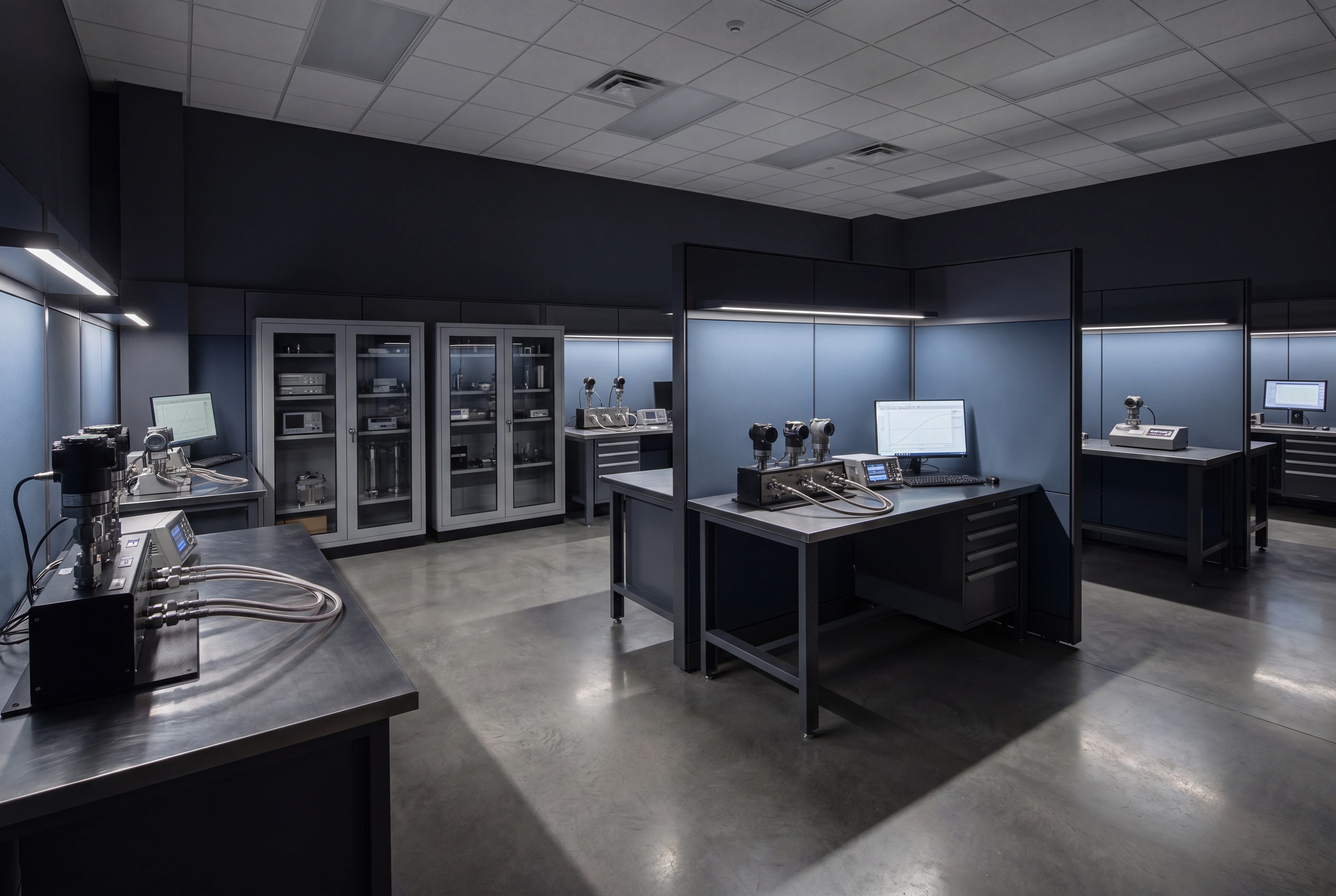
Pressure Transmitter, Transducer & Sensor Calibration is performed in Saint Paul to recognized acceptance criteria, with documented measurement uncertainty and NIST-traceable results issued on every certificate.
Service Detail
Pressure Transmitter, Transducer & Sensor in Saint Paul — in-depth reference
Saint Paul Industrial Infrastructure and Pressure Instrumentation Demand
The concentration of advanced manufacturing, chemical processing, and specialized food production within Ramsey County and the greater Saint Paul metropolitan area establishes a continuous requirement for high-accuracy pressure instrumentation calibration. Along the Mississippi River industrial corridor and within established manufacturing hubs such as the Riverview Industrial Park and the Midway area, facilities rely on automated systems where pressure transmitters, transducers, and sensors serve as critical control nodes. For instance, chemical blending operations and specialized polymer production, which characterize the regional output of legacy employers like 3M in the adjacent East Metro and various chemical formulation plants in Saint Paul, require precise pressure monitoring to manage reactions, maintain vessel integrity, and ensure batch consistency. Similarly, localized food and beverage processing facilities, such as the historic Pearson's Candy Company plant, utilize pressure sensors to control steam jacket pressures and pneumatic conveying systems where minor deviations disrupt process control.
These industrial operations rely on loop-powered pressure transmitters - typically transmitting 4-20 mA, 0-10 V, or digital HART protocols - to feed real-time data back to central Programmable Logic Controllers (PLCs) and Distributed Control Systems (DCS). If a sensor experiences drift due to thermal cycling or mechanical fatigue common in heavy industrial environments like the Gerdau Saint Paul steel mill, the entire feedback loop is compromised. This operational reality necessitates systematic calibration intervals to verify zero-point stability, span alignment, and linearity across the instrument's entire working range. Maintaining localized calibration compliance supports the regional supply chain, ensuring that raw material processing and finished goods manufacturing meet the rigid quality parameters expected by national and international distributors operating out of the Upper Midwest transportation hubs.
Technical Standards, Tolerance Grades, and Regulatory Compliance
In Saint Paul, compliance frameworks dictate specific calibration methodologies for pressure sensing devices, particularly for facilities operating under federal oversight. Biomedical, pharmaceutical, and sanitation-chemical manufacturing operations, such as those associated with Ecolab's regional research and production footprints, are subject to stringent FDA regulations. Specifically, FDA 21 CFR Part 211.160 mandates that instruments, apparatus, and recording devices must be calibrated at suitable intervals according to an established written program. Under these requirements, pressure transducers used in sterile fluid paths, sanitization loops, or clean-in-place (CIP) systems must demonstrate unbroken traceability to national standards, primarily through the National Institute of Standards and Technology (NIST). Standard calibration protocols verify the sensor output against a known pressure standard, such as a pneumatic or hydraulic deadweight tester, ensuring the uncertainty budget remains within the allowable limits defined by the facility's quality management system.
Calibration procedures for these devices are executed in alignment with internationally recognized standards, notably ISO/IEC 17025, which governs the general requirements for the competence of testing and calibration laboratories. When calibrating pressure transmitters and transducers, metrologists assess performance criteria such as hysteresis, repeatability, and conformity. Tolerances are frequently designated based on ASME B40.100 standards or manufacturer-specified accuracy classes, which can range from plus-or-minus 0.1 percent to 1.0 percent of full scale. For safety-critical systems, including boiler pressure monitoring and high-pressure gas distribution lines governed by Minnesota OSHA and the Minnesota Department of Labor and Industry, calibrations must confirm that instruments fail in a safe state and activate alarms at precise pressure thresholds. Documentation must detail the 'as-found' and 'as-left' calibration data, providing the verifiable audit trail necessary to pass both internal quality audits and external regulatory inspections.
Related Services
Pressure Gauge Calibration
View in Saint Paul ↗ RelatedDigital Pressure Gauge Calibration
View in Saint Paul ↗ RelatedManometer Calibration
View in Saint Paul ↗ RelatedPressure Switch & Relief Valve Calibration
View in Saint Paul ↗ RelatedLeak Tester Calibration
View in Saint Paul ↗ RelatedPiston Gauge Calibration
View in Saint Paul ↗Request pressure transmitter, transducer & sensor in Saint Paul.
Submit instrument details to receive an itemized quote within one business day. NIST-traceable results, documented for audit and compliance.