Accredited Industrial Deadweight Tester Calibration Services Saint Paul
Deadweight Tester Calibration in Saint Paul, MN is performed by accredited laboratories to ISO/IEC 17025 acceptance criteria, with documented uncertainty and NIST-traceable results.
Quote Deadweight Tester — Saint Paul
Response within one business day
Service Overview
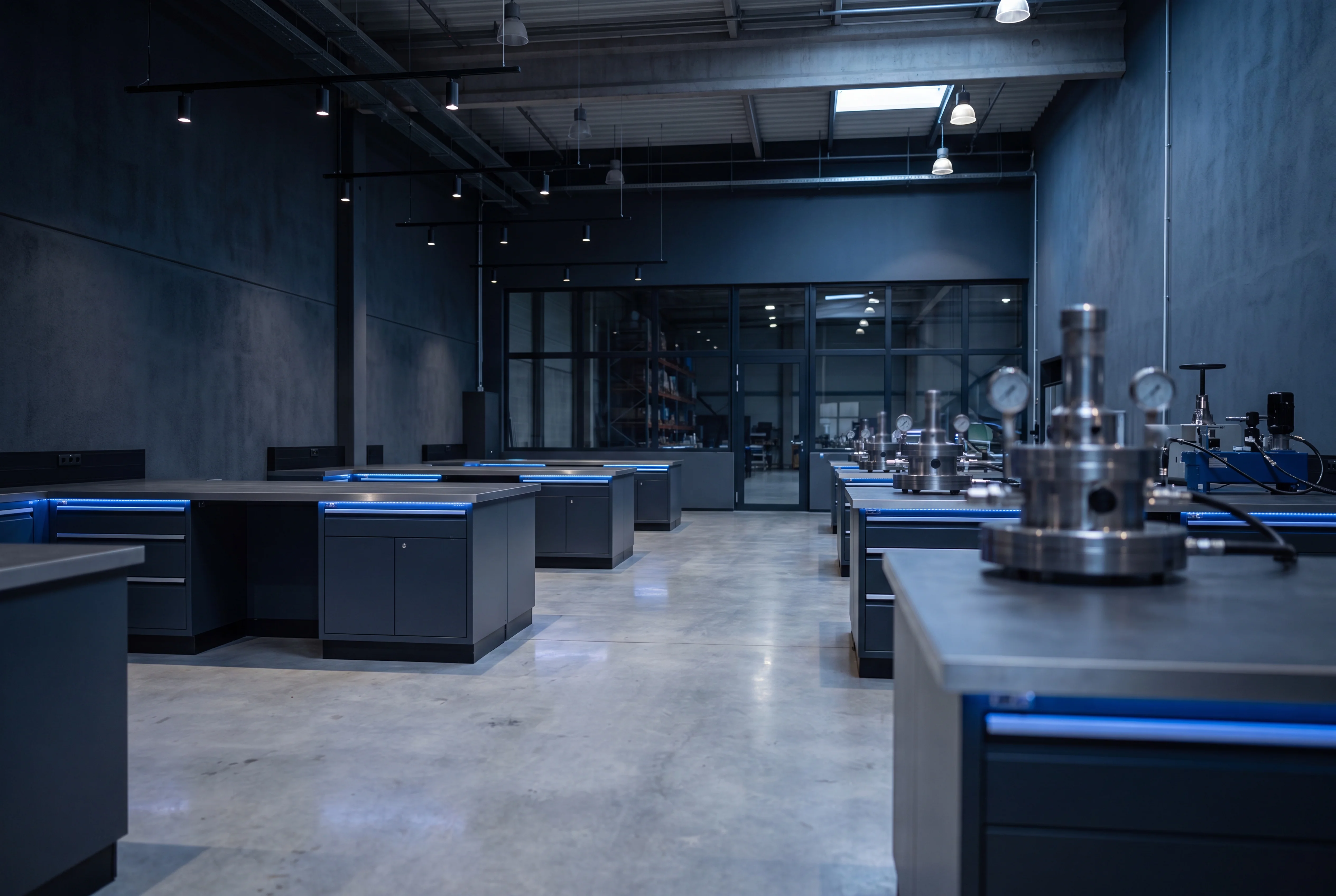
Deadweight Tester Calibration is performed in Saint Paul to recognized acceptance criteria, with documented measurement uncertainty and NIST-traceable results issued on every certificate.
Service Detail
Deadweight Tester in Saint Paul — in-depth reference
Industrial Drivers for Primary Pressure Standards in Saint Paul
Saint Paul, Minnesota, and the broader Ramsey County jurisdiction anchor a dense concentration of advanced manufacturing, life sciences, and heavy industrial operations. The industrial corridors flanking the Mississippi River, alongside specialized zones like the Midway Industrial District and Energy Park, house facilities that demand rigorous pressure measurement infrastructure. Within these sectors, deadweight testers serve as the foundational pressure reference, establishing the baseline for internal metrology and quality control. Regional manufacturing spans fluid power components, complex polymer extrusions, and medical device assemblies. These processes require exact pressure parameters to ensure structural integrity and material performance. The proximity to major corporate research and development centers, including extensive material science campuses in adjacent Maplewood, drives a sustained local requirement for the calibration of primary pressure standards. These standards are strictly necessary to validate the secondary calibrators, digital pressure controllers, and process transmitters deployed directly on production floors throughout the Twin Cities metro area.
Operational environments across the Saint Paul industrial landscape exert continuous pressure on metrological stability. Facilities embedded in the regional aerospace and defense supply chains operate under exacting contractual obligations that forbid measurement deviations. A deadweight tester, operating as a fundamental measurement device relying on physical mass and effective area, provides the definitive unbroken traceability chain back to national standards. However, the moving components of these pressure balances, specifically the piston and cylinder assemblies, are subject to microscopic wear through sustained continuous usage in busy industrial calibration labs. Furthermore, regional supply chains heavily emphasize just-in-time manufacturing, meaning that out-of-tolerance pressure instrumentation can halt entire production lines. Maintaining the operational integrity of these primary reference instruments prevents cascading measurement errors that could lead to widespread product quarantine or catastrophic failure in high-pressure hydraulic and pneumatic systems manufactured within the region.
Metrological Compliance and Tolerance Specifications for Pressure Balances
The calibration and ongoing certification of deadweight testers demand strict adherence to international metrology standards, including the protocols established within ISO/IEC 17025 and specific technical guidelines such as EURAMET cg-3 or OIML R 110. The calibration process for a pressure balance involves complex physical metrology. Because these devices operate by applying known physical masses over the precisely measured effective area of a piston-cylinder assembly, localized environmental and geographic factors carry critical metrological significance. Specifically, gravity is not uniform; the acceleration due to gravity in Saint Paul, Minnesota, differs from the standard reference gravity often used during initial equipment manufacture. Without a precise local gravity correction incorporated into the calculation algorithms, the downward force exerted by the mass set will yield fundamentally inaccurate pressure generation. Additionally, rigorous environmental monitoring is required to account for air density, which dictates the necessary buoyancy corrections for the stainless steel or non-magnetic mass sets, and ambient temperature, which affects the thermal expansion coefficients of the tungsten carbide or specialized steel piston assemblies.
Facilities within Saint Paul's prominent medical technology sector must align their pressure calibration protocols with stringent regulatory frameworks, predominantly FDA 21 CFR Part 820 Quality System Regulations and FDA 21 CFR Part 211 for current good manufacturing practices. Under these mandates, any primary standard used to verify process instrumentation must possess documented, unbroken traceability to the National Institute of Standards and Technology (NIST) or equivalent national metrology institutes. Calibration of a deadweight tester typically employs the cross-floating method against a reference standard of superior metrological characterization. This meticulous procedure measures the equilibrium state, assessing parameters such as the falling rate and spin rate of the piston to identify any frictional anomalies or fluid flow irregularities. The resulting certification must explicitly state the effective area at null pressure and the pressure distortion coefficient. By maintaining these rigorous acceptance criteria and managing exhaustive uncertainty budgets, Saint Paul laboratories ensure their foundational pressure standards satisfy the tolerance grades required for critical manufacturing compliance and advanced engineering research.
Related Services
Pressure Gauge Calibration
View in Saint Paul ↗ RelatedDigital Pressure Gauge Calibration
View in Saint Paul ↗ RelatedManometer Calibration
View in Saint Paul ↗ RelatedPressure Transmitter, Transducer & Sensor Calibration
View in Saint Paul ↗ RelatedPressure Switch & Relief Valve Calibration
View in Saint Paul ↗ RelatedLeak Tester Calibration
View in Saint Paul ↗Request deadweight tester in Saint Paul.
Submit instrument details to receive an itemized quote within one business day. NIST-traceable results, documented for audit and compliance.