Accredited Industrial Pressure Transmitter, Transducer & Sensor Calibration Services Saint Charles
Pressure Transmitter, Transducer & Sensor Calibration in Saint Charles, MO is performed by accredited laboratories to ISO/IEC 17025 acceptance criteria, with documented uncertainty and NIST-traceable results.
Quote Pressure Transmitter, Transducer & Sensor — Saint Charles
Response within one business day
Service Overview
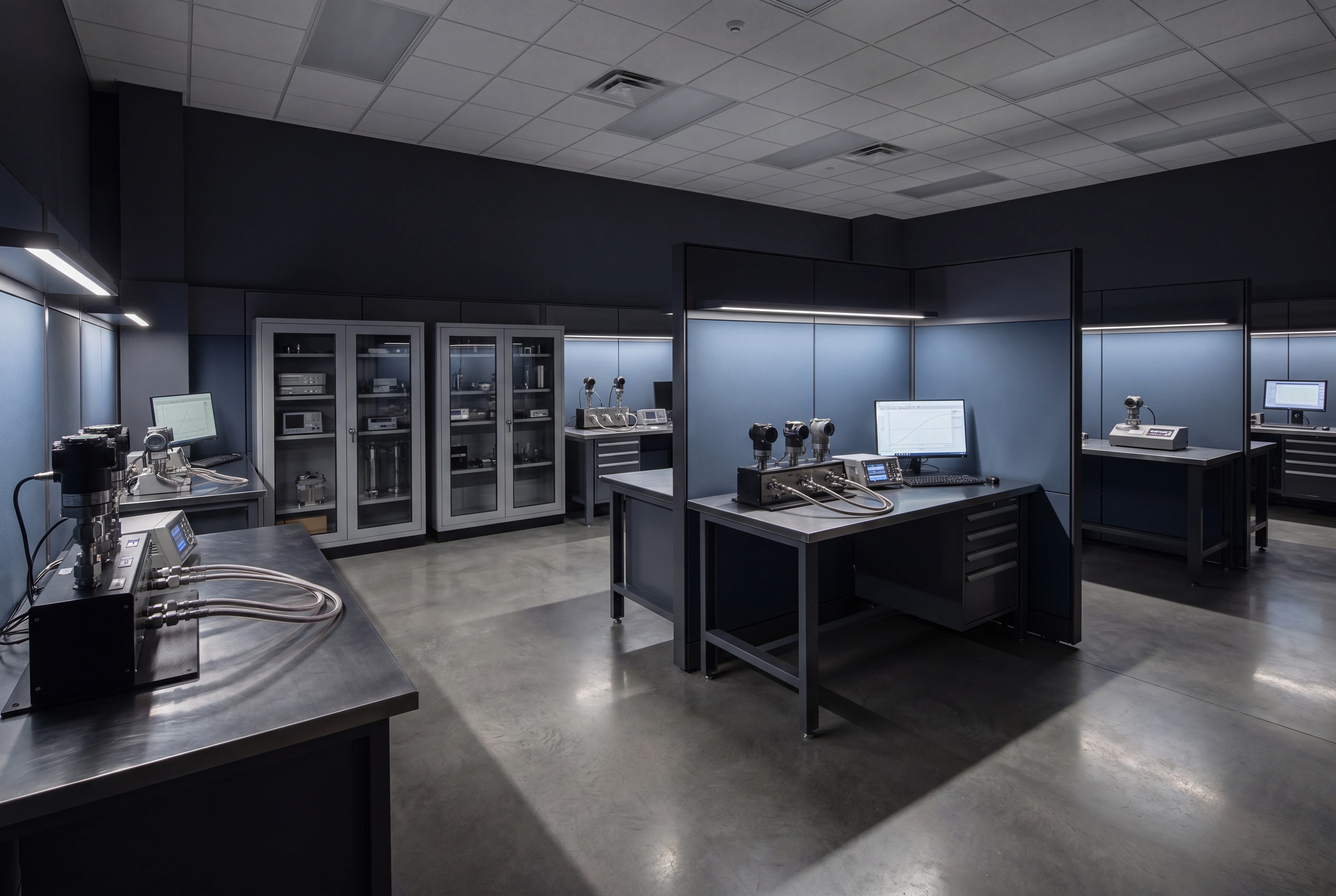
Pressure Transmitter, Transducer & Sensor Calibration is performed in Saint Charles to recognized acceptance criteria, with documented measurement uncertainty and NIST-traceable results issued on every certificate.
Service Detail
Pressure Transmitter, Transducer & Sensor in Saint Charles — in-depth reference
Industrial Demand for Pressure Sensor Accuracy in Saint Charles
The manufacturing landscape in Saint Charles, Missouri, is anchored by high-stakes aerospace defense production and a dense network of advanced precision machining facilities. Operations within complexes such as the Fountain Lakes Commerce Center and the Elm Point Industrial Park rely heavily on the continuous accuracy of pressure transmitters, transducers, and sensors to control complex automation systems. Within the aerospace and defense sector, particularly driven by large-scale facilities like the local Boeing defense plant, hydraulic testing rigs and pneumatic control systems require strict verification of pressure instrumentation. Transducers monitoring these systems measure dynamic and static pressures in critical test articles, where even minor signal drift can invalidate expensive qualification testing or lead to structural anomalies. Piezo-resistive and thin-film strain gauge transducers are heavily utilized in these high-vibration applications. The regional supply chain, which also supports heavy automotive assembly in nearby Wentzville, utilizes differential pressure transmitters to manage facility HVAC and cleanroom environments, ensuring particulate control and environmental stability for sensitive manufacturing processes.
Beyond aerospace, the Saint Charles industrial corridor supports various chemical processing, plastics manufacturing, and agricultural technology operations situated near the Missouri River transport routes. In these continuous-process environments, 4-20mA pressure transmitters and smart sensors utilizing HART, Profibus, or Foundation Fieldbus protocols are essential for monitoring reactor vessel pressures, pipeline flow rates, and storage tank levels. Sensor degradation caused by overpressure events, thermal cycling, or mechanical vibration in these harsh environments necessitates rigorous periodic calibration. Maintaining accurate pressure measurement loops prevents material waste, optimizes energy consumption in boiler and chiller systems, and mitigates the risk of catastrophic overpressurization. Routine calibration of these instruments ensures that analog and digital outputs precisely reflect the physical pressure variables, enabling automated logic controllers to execute safe and efficient process adjustments without manual operator intervention.
Metrological Standards and Compliance Frameworks
The validation of pressure instrumentation is governed by a stringent framework of international standards and sector-specific regulations. For the aerospace defense contractors and tier-one suppliers operating in Saint Charles, quality management systems such as AS9100 and specialized NADCAP audit criteria dictate the metrological parameters for all test and measurement equipment. Calibration of pressure transducers and transmitters must demonstrate an unbroken chain of traceability to the National Institute of Standards and Technology (NIST), adhering strictly to the guidelines established by ISO/IEC 17025:2017 and ANSI/NCSL Z540.1-1994. Additionally, for regional facilities engaged in pharmaceutical or food-grade production, pressure sensor accuracy is mandated under FDA 21 CFR Part 211, which outlines current good manufacturing practices. These regulatory frameworks require comprehensive documentation of metrological data, including as-found and as-left conditions, calculated uncertainties, and precise environmental baseline recordings captured during the calibration procedure.
Technical execution of pressure calibration requires methodologies that isolate and quantify measurement errors across the entire operating range of the device under test (DUT). Verification procedures utilize high-accuracy primary standards, such as pneumatic or hydraulic deadweight testers, alongside secondary standards like automated multi-range pressure controllers.
- Performance Quantification: Hysteresis, non-linearity, repeatability, and zero shift are systematically measured and documented to evaluate the overall health of the sensing element.
- Acceptance Criteria: Tolerances are applied based on engineering standards such as ASME B40.100 or specific original equipment manufacturer (OEM) performance specifications.
- Application-Specific Ranges: Low-range differential pressure transmitters for cleanrooms require calibration resolving to minute fractions of an inch of water column, whereas hydraulic pressure transducers are tested at multi-point high-pressure generations up to 10,000 psi to verify structural integrity under extreme mechanical stress.
For absolute and gauge pressure transmitters, calibration spans must be carefully tested across multiple ascending and descending pressure points to ensure bidirectional accuracy. The rigorous application of these technical procedures ensures that every pressure sensor deployed in Saint Charles manufacturing environments performs within expected parameters, safeguarding both product quality and operational safety.
Related Services
Pressure Gauge Calibration
View in Saint Charles ↗ RelatedDigital Pressure Gauge Calibration
View in Saint Charles ↗ RelatedManometer Calibration
View in Saint Charles ↗ RelatedPressure Switch & Relief Valve Calibration
View in Saint Charles ↗ RelatedLeak Tester Calibration
View in Saint Charles ↗ RelatedPiston Gauge Calibration
View in Saint Charles ↗Request pressure transmitter, transducer & sensor in Saint Charles.
Submit instrument details to receive an itemized quote within one business day. NIST-traceable results, documented for audit and compliance.