Accredited Industrial Leak Tester Calibration Services Saint Charles
Leak Tester Calibration in Saint Charles, MO is performed by accredited laboratories to ISO/IEC 17025 acceptance criteria, with documented uncertainty and NIST-traceable results.
Quote Leak Tester — Saint Charles
Response within one business day
Service Overview
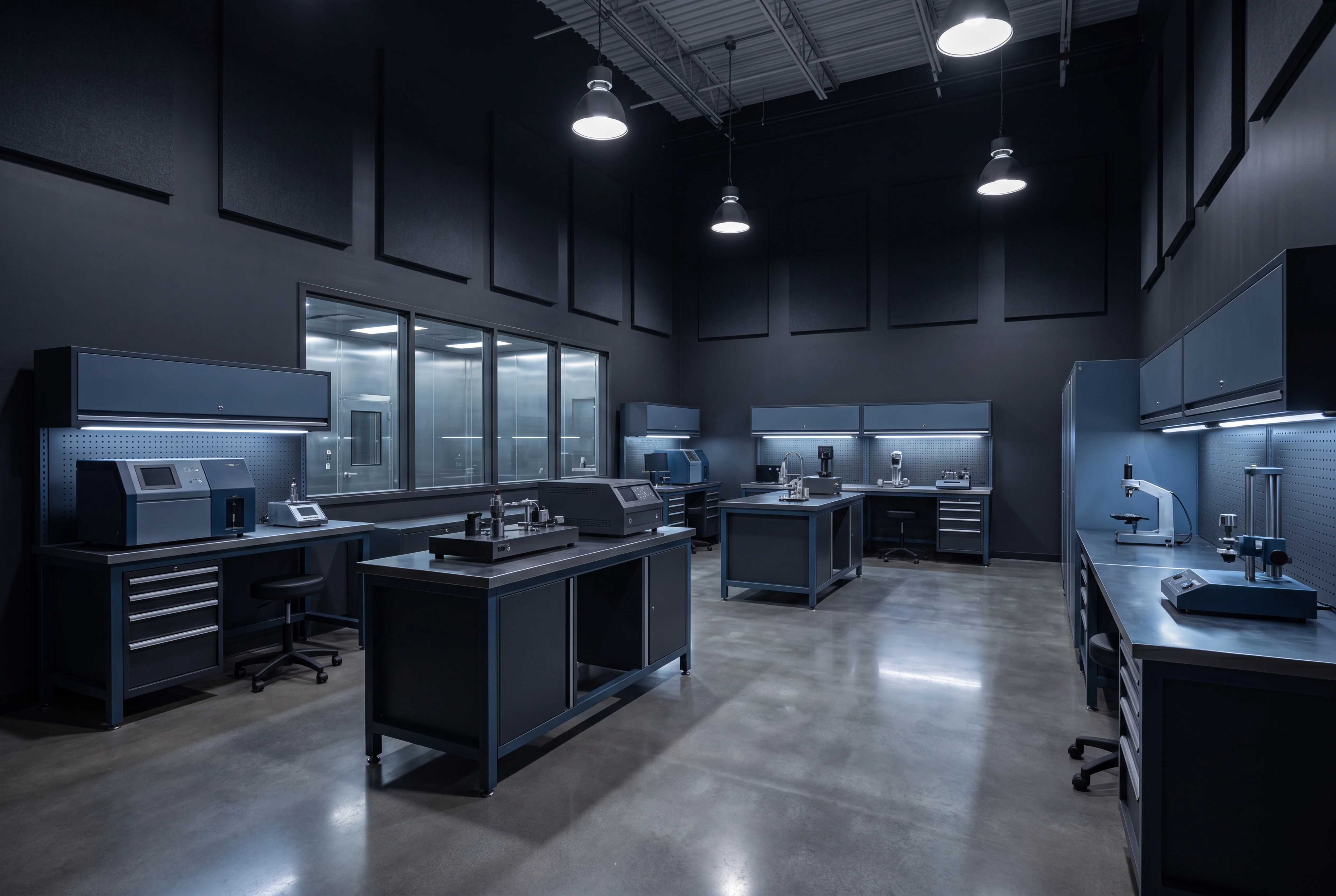
Leak Tester Calibration is performed in Saint Charles to recognized acceptance criteria, with documented measurement uncertainty and NIST-traceable results issued on every certificate.
Service Detail
Leak Tester in Saint Charles — in-depth reference
Industrial Drivers for Leak Tester Calibration in Saint Charles
The manufacturing corridor running through Saint Charles, Missouri, particularly along Interstate 70 and within zones like the Fountain Lakes Commerce Center and Elm Point Industrial Park, houses a dense concentration of aerospace, medical device, and precision automotive component producers. Within these facilities, automated leak testing systems act as a critical quality control gateway, ensuring that fluid containment and hermetic seals meet stringent engineering specifications. Aerospace contractors and sub-tier defense suppliers operating in the Greater St. Louis region rely on pressure decay and mass flow leak testers to validate pneumatic systems, fuel line manifolds, and sealed avionics enclosures. When environmental enclosures or fluid-bearing castings are manufactured, verifying their integrity requires highly sensitive instrumentation capable of detecting minute pressure drops. Routine leak tester calibration is mandated to verify the accuracy of the differential pressure transducers and mass flow sensors embedded in these systems. Without verified measurement accuracy, the natural temperature fluctuations and barometric pressure shifts inherent to large factory floor environments can mask true leak rates, leading to false acceptance of defective components or unwarranted rejection of compliant parts.
In the localized medical device sector, operations mandate rigorous verification of sterile barrier systems, catheter assemblies, and fluid delivery mechanisms. Facilities in the Saint Charles area utilizing vacuum decay or pressure decay technologies must ensure their leak testers operate within exact tolerance grades to comply with rigid manufacturing protocols. Similarly, local automotive parts manufacturers employ high-speed automated leak testing for transmission housings, cooling system reservoirs, and engine blocks. The high throughput of these manufacturing lines means that leak testers are subjected to millions of pressurization and exhaust cycles, which inevitably induces sensor drift over time. Specialized manufacturing equipment used in HVAC coil production also requires verified leak testing to confirm refrigerant containment prior to shipment. Calibration processes mitigate transducer drift, re-establishing the precise baseline measurement parameters required to maintain production velocity while preventing non-compliant, leaking products from entering the regional or global supply chain.
Metrological Standards and Compliance Requirements
The metrological foundation for leak tester calibration relies on verifying multiple interdependent physical variables: pressure, flow, volume, and time. Calibration protocols must align strictly with the general requirements for the competence of testing and calibration laboratories outlined in ISO/IEC 17025. For medical device and pharmaceutical packaging manufacturers in Saint Charles governed by FDA 21 CFR Part 820 Quality System Regulations or FDA 21 CFR Part 211, the calibration of leak testing equipment is a core, audited component of equipment qualification. When assessing container closure integrity, testing protocols routinely reference USP 1207 guidelines. This necessitates that the instrumentation used for vacuum decay and pressure decay testing maintains documented, unbroken chains of traceability to the National Institute of Standards and Technology (NIST). This metrological traceability is typically achieved by comparing the leak tester's internal pressure and flow sensors against reference standards, such as high-accuracy digital pressure controllers, laminar flow elements, or primary deadweight testers, ensuring that measurement uncertainty is properly quantified and documented.
Calibration parameters extend beyond static pressure measurement to include the verification of artificial leak standards, such as calibrated capillary tubes or permeation leaks. These physical artifacts are routinely used to master and verify the testing systems directly on the production floor, meaning the mastering artifacts themselves require rigorous calibration. Industry-specific testing methods, such as ASTM F2095 for pressure decay leak testing of flexible packages or ASTM F2338 for the nondestructive detection of leaks using vacuum decay, explicitly define the functional expectations and baseline sensitivity of the testing equipment. Conformance to these standardized methods requires leak testing instrumentation to exhibit strict measurement linearity, minimal hysteresis, and exceptional repeatability across its designated operational range. Acceptance criteria for the calibration procedure are established based on the allowable leak rate of the specific component under test, the internal test volume, and the thermodynamic stability necessary for accurate decay measurement. Verifying these parameters ensures that the test uncertainty ratio of the leak tester remains adequate to detect the required reject thresholds, mitigating the risk of adiabatic heating errors and maintaining both regulatory compliance and operational safety across Saint Charles industrial environments.
Related Services
Pressure Gauge Calibration
View in Saint Charles ↗ RelatedDigital Pressure Gauge Calibration
View in Saint Charles ↗ RelatedManometer Calibration
View in Saint Charles ↗ RelatedPressure Transmitter, Transducer & Sensor Calibration
View in Saint Charles ↗ RelatedPressure Switch & Relief Valve Calibration
View in Saint Charles ↗ RelatedPiston Gauge Calibration
View in Saint Charles ↗Request leak tester in Saint Charles.
Submit instrument details to receive an itemized quote within one business day. NIST-traceable results, documented for audit and compliance.