Accredited Industrial Leak Tester Calibration in Flint, MI
Leak Tester Calibration in Flint, MI is performed by ISO/IEC 17025-accredited laboratories to recognized acceptance criteria, with documented uncertainty and NIST-traceable results.
Quote Leak Tester Calibration — Flint
Response within one business day
Service Overview
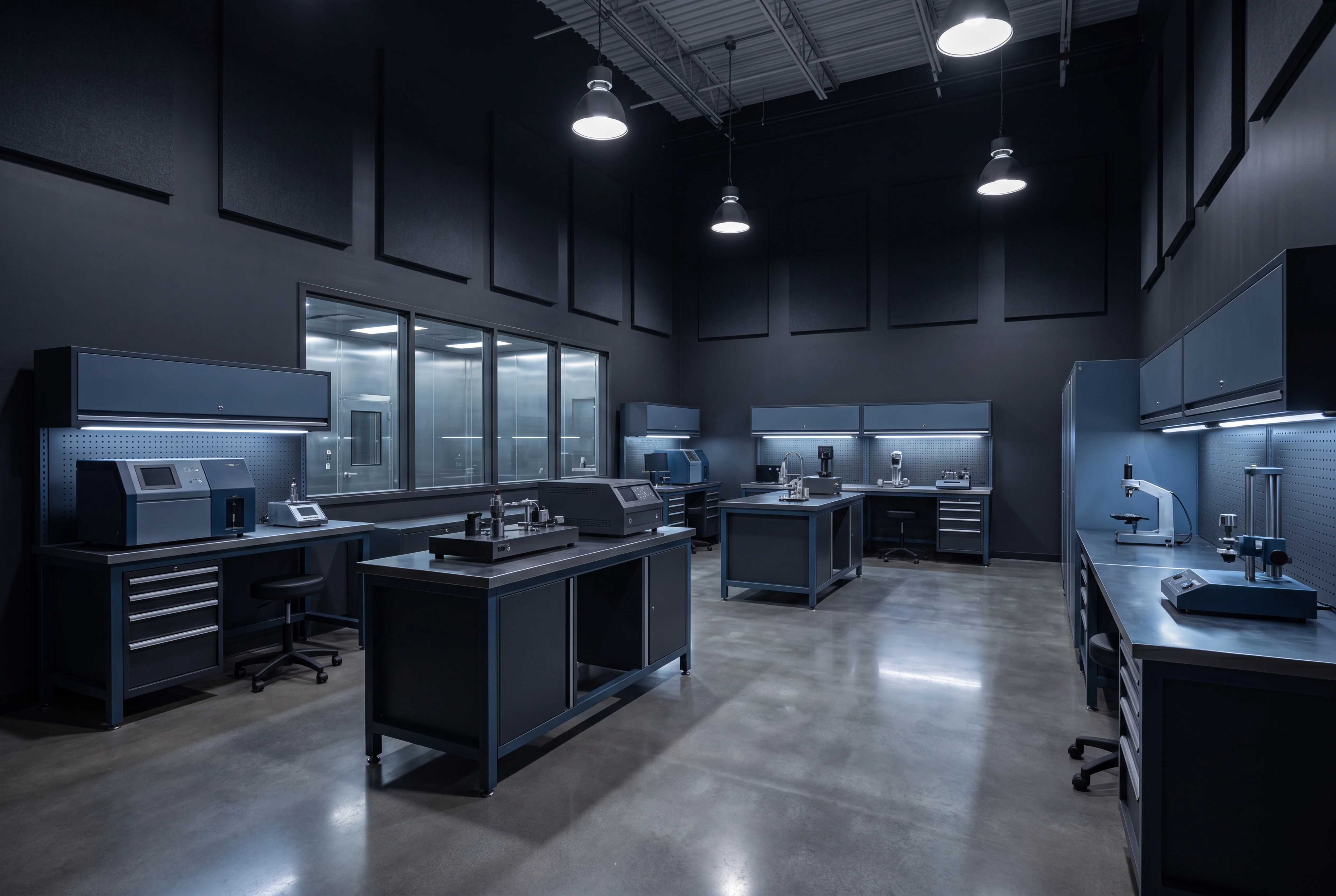
Pressure Decay Leak Tester
Calibration of pressure decay leak testers requires precise verification of both the internal pressure sensing circuitry and the temporal measurement parameters. The primary function of these instruments relies on detecting minute pressure variations within a known test volume over a specified duration to calculate volumetric leak rates, typically expressed in standard cubic centimeters per minute (sccm) or equivalent metric units. To ensure measurement integrity, calibration is performed by applying known reference pressures across the instrument's operational range and comparing the indicated values against master standards maintaining documented NIST traceability.
Because pressure decay leak testing is critical for component integrity validation in automated manufacturing and quality control environments, the verification process must account for environmental variables such as temperature fluctuations and adiabatic effects that can skew decay profiles. Verification procedures are executed under strict laboratory controls in accordance with ISO/IEC 17025 accreditation requirements. The comprehensive calibration protocol evaluates several core functional elements to ensure reliable defect detection:
- Multipoint verification of the internal pressure transducer across its complete target span.
- Assessment of the instrument timing circuits governing the fill, stabilization, and test phases.
- Validation of the leak rate calculation algorithms using calibrated reference master leaks.
- Evaluation of zero-stability and measurement repeatability under simulated test volume conditions.
Vacuum Decay Leak Tester
Vacuum decay leak tester calibration is executed to verify the measurement accuracy of differential pressure transducers, vacuum sensors, and volumetric flow components under precise pressure-drop conditions. Calibration is performed under ISO/IEC 17025 accreditation to ensure the metrological traceability of pressure, time, and volume metrics to National Institute of Standards and Technology (NIST) standards. This process aligns with industry methodologies, including ASTM F2338, ensuring non-destructive test validity. During verification, master leak standards and calibrated reference volumes are introduced to simulate specific leak rates, typically quantified in standard cubic centimeters per second (sccs) or Pascals per second (Pa/s). This rigorous verification ensures that the decay curve analysis utilized by the instrument remains highly sensitive and repeatable, preventing false-pass results. Critical calibration parameters include:
- Transducer Linearity: Assessment of the internal pressure sensors across the full vacuum scale to ensure uniform measurement response.
- Decay Rate Accuracy: Verification of the timing circuits and algorithmic calculation of pressure drop per unit time.
- Chamber Volume Verification: Validation of the correlation between test chamber volume and pressure changes to maintain calibrated leak rate calculations.
- System Resolution and Repeatability: Confirmation that the instrument can distinguish minute pressure variations from baseline environmental noise.
Mass Flow Leak Tester
Mass flow leak testers are calibrated to verify both the pressure measurement circuitry and the mass flow sensor, ensuring precise quantification of leak rates in production or quality assurance environments. Calibration is performed by comparing the instrument's mass flow readings against high-accuracy reference flow meters and precision pressure calibrators. This procedure confirms that flow rates, typically measured in standard cubic centimeters per minute (sccm) or standard liters per minute (slpm), remain within OEM specification limits across the entire operating range.
Under ISO/IEC 17025 accreditation parameters, mass flow leak tester calibration requires strict environmental controls and documented metrological traceability to the National Institute of Standards and Technology (NIST). The multipoint calibration sequence evaluates linearity, repeatability, and hysteresis. Routine verification of these test systems mitigates the risk of false passes or false failures in critical component leak testing applications. Key parameters validated during the calibration cycle include:
- Flow sensor accuracy across defined measurement ranges
- Pressure transducer verification at the specified test pressure state
- Zero-flow offset and span calibration adjustments
- System leak integrity and differential pressure stability
- Temperature compensation circuitry functionality
Technical Detail
Helium Leak Detector Calibration
Helium leak detector calibration involves the precise verification of the internal mass spectrometer tube and vacuum pumping system against known standard leaks. Calibration is performed under ISO/IEC 17025 accreditation, ensuring that measured leak rates maintain unbroken traceability to the National Institute of Standards and Technology (NIST) or equivalent national metrology institutes. The evaluation covers both vacuum and sniffing operational modes across multiple decades of sensitivity, typically validating readings from gross leak ranges down to ultra-fine leak thresholds of 10^-12 atm-cc/sec. Strict adherence to established vacuum technology guidelines ensures that the internal reference leak and the detector analytical components function within specified tolerances.
Critical parameters evaluated during the certification of mass spectrometer helium leak detectors include:
- Standard leak comparison: Direct signal validation using reference temperature-compensated capillary or permeation helium standard leaks.
- Zero-point stability: Assessment of the baseline signal and noise floor under high vacuum to determine the true minimum detectable leak rate.
- Response and clean-up time: Measurement of the detector signal rise time upon helium exposure and the subsequent pumping clearance speed.
- Ion source performance: Verification of filament emission current and spectrometer tuning for optimal helium peak resolution.
- Crossover pressure points: Testing of the transition valves between roughing, foreline, and high-vacuum turbo molecular stages to prevent spectrometer contamination.
Leak Tester Calibration in Flint
Industrial activity throughout Flint, Michigan, and the broader Genesee County area relies heavily on automated leak testing systems to verify the structural and functional integrity of manufactured components. The region's historical concentration of automotive assembly, powertrain production, and metal stamping creates a persistent demand for the calibration of pressure decay and mass flow leak testers. Facilities clustered along the I-69 and I-75 corridors, extending from the vast manufacturing complexes near Bristol Road to the specialized supplier parks surrounding Bishop International Airport, utilize this diagnostic equipment to test engine blocks, transmission casings, and complex fluid routing assemblies. For tier-one and tier-two automotive suppliers operating within these local supply chains, validating the seal integrity of fuel rails, brake calipers, and pneumatic actuators is a critical operational mandate.
More on leak tester calibration in Flint
Beyond traditional automotive manufacturing, the evolving industrial landscape of mid-Michigan includes research and development operations affiliated with local engineering institutions, as well as emerging sectors in medical device component fabrication. These specialized fields introduce rigorous operational pressures, demanding the quantification of micro-leaks in sealed housings, fluid reservoirs, and sterile packaging. When a leak testing unit exhibits sensor drift or hysteresis, the risk of false passes or false failures increases exponentially, potentially leading to costly production stoppages or the distribution of non-compliant parts. The geographic concentration of interconnected supply chains in the Flint metropolitan area dictates that a measurement error at a single supplier facility can disrupt downstream assembly operations. Consequently, the calibration of leak testers serves as a baseline requirement for maintaining production velocity and meeting the strict quality control tolerances enforced by major original equipment manufacturers.
Metrological Standards and Compliance Frameworks
The metrological validation of leak testers requires strict adherence to international regulatory frameworks and standardized calibration methodologies. In the automotive sector, supply chain facilities operating in Flint are largely governed by the IATF 16949 quality management standard, which mandates comprehensive measurement system analysis (MSA) and routine gauge repeatability and reproducibility (GR&R) evaluations. To satisfy these rigorous requirements, the pressure transducers, mass flow sensors, and internal timing circuits of the leak testing equipment must undergo regular calibration with unbroken traceability to the National Institute of Standards and Technology (NIST). The calibration process typically involves comparing the instrument's readings against high-accuracy digital pressure standards or deadweight testers, applying a specified test pressure, and measuring the decay or flow variables over a strictly defined interval.
Compliance with ISO/IEC 17025 accredited calibration protocols dictates the methodology for characterizing both the leak testing instrumentation and the master reference leaks used for daily production verification. Acceptance criteria for these diagnostic systems are highly specific, routinely measured in standard cubic centimeters per minute (sccm) or standard cubic centimeters per second (sccs). Methods governed by standards such as ASTM E432 and ASTM E2930 provide the technical foundation for evaluating pressure change and mass flow test parameters. A comprehensive leak tester calibration evaluates several critical functional areas:
- Pressure Transducer Linearity: Verification of the primary pressure sensor across multiple ascending and descending test points to ensure proportional response and quantify any mechanical hysteresis.
- Flow Meter Accuracy: Calibration of internal mass flow components using standard volumetric flow rates, which is critical for mass flow leak testing variants.
- Temperature Compensation: Assessment of internal thermistors that adjust pressure drop calculations based on ambient thermal shifts, as defined by the ideal gas law.
- Timer and Valve Sequencing: Validation of the fill, stabilize, test, and exhaust cycle timings to guarantee repeatable measurement intervals during high-speed production.
Because ambient temperature variations directly impact pressure readings, the temperature compensation algorithms integrated into advanced leak testers must be verified against traceable thermometry standards. Maintaining these tight tolerance grades ensures that local manufacturing facilities correctly identify minute variations in seal performance while remaining fully aligned with industrial compliance mandates and quality control directives.
Related Services
Pressure Gauge Calibration
View in Flint ↗ RelatedDigital Pressure Gauge Calibration
View in Flint ↗ RelatedManometer Calibration
View in Flint ↗ RelatedPressure Transmitter, Transducer & Sensor Calibration
View in Flint ↗ RelatedPressure Switch & Relief Valve Calibration
View in Flint ↗ RelatedPiston Gauge Calibration
View in Flint ↗Request leak tester calibration in Flint.
Submit instrument details to receive an itemized quote within one business day. NIST-traceable results, documented for audit and compliance.