Accredited Industrial Pressure Gauge Calibration in Cedar Rapids, IA
Pressure Gauge Calibration in Cedar Rapids, IA is performed by ISO/IEC 17025-accredited laboratories to recognized acceptance criteria, with documented uncertainty and NIST-traceable results.
Quote Pressure Gauge Calibration — Cedar Rapids
Response within one business day
Service Overview
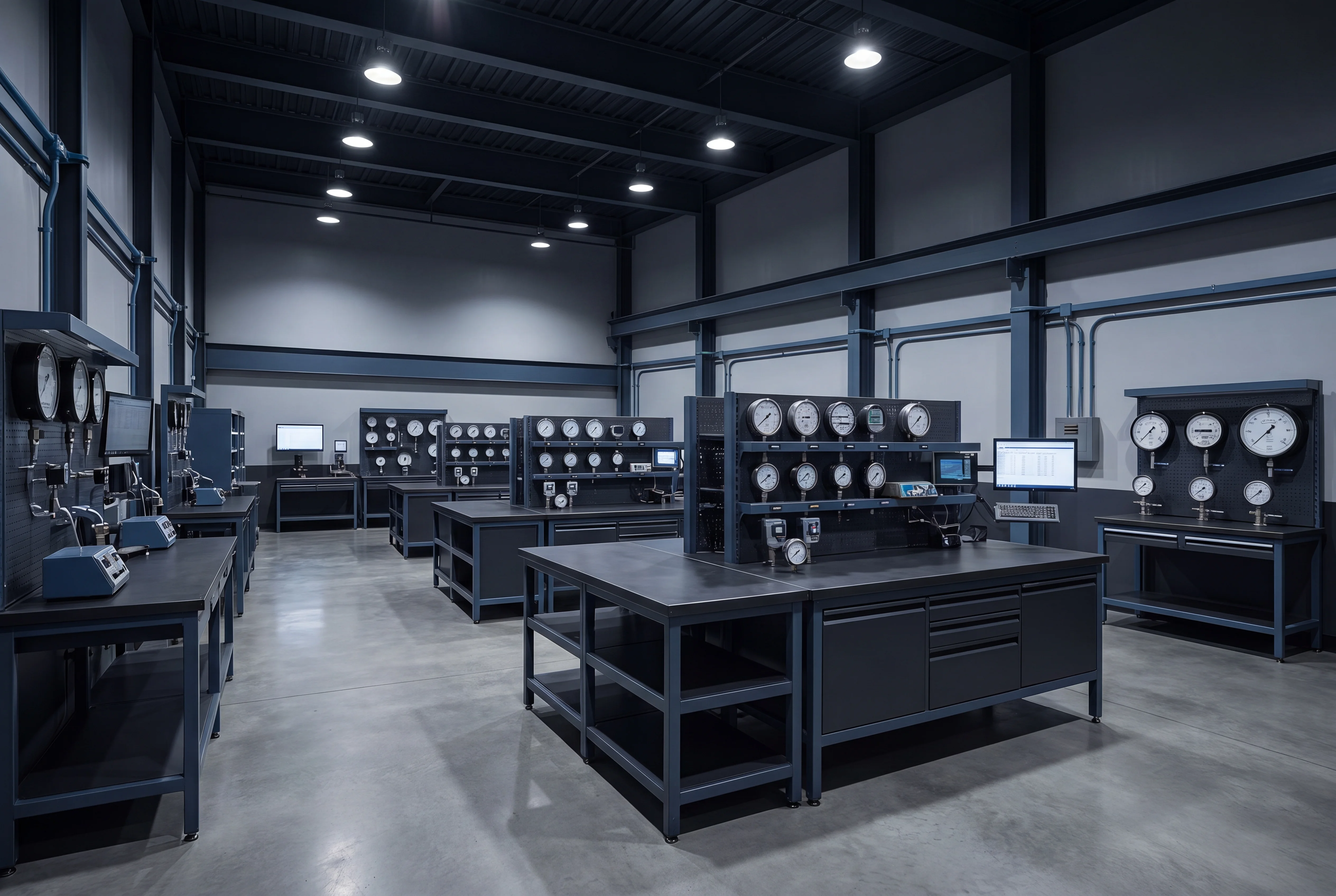
Bourdon Tube Pressure Gauge Calibration
Bourdon tube pressure gauge calibration requires precise control of environmental conditions and metrological traceability to address inherent physical characteristics such as hysteresis, linearity, and repeatability. Standard calibration processes are performed in accordance with ASME B40.100, which establishes accuracy grades, testing procedures, and permissible error limits for dial-indicating pressure gauges. Mechanical elements, including C-type, helical, or spiral Bourdon tubes, are subjected to controlled pressure increments and decrements to characterize elastic deformation behavior across the full scale of the instrument. To maintain compliance with ISO/IEC 17025 metrological requirements, the following parameters are systematically evaluated:
- Hysteresis and Repeatability: Measurement deviations are analyzed by comparing increasing and decreasing pressure cycles to identify material lag or mechanical wear.
- Linearity and Span: Calibration points are distributed across the gauge range to verify proportional pointer deflection and to adjust internal linkages if deviation exceeds specified tolerances.
- Friction and Tap Testing: The movement mechanism is evaluated before and after tapping the case to detect binding, gear wear, or excessive play in the segment and pinion.
- NIST-Traceable Reference Standards: Pressure generation is controlled using high-precision digital pressure controllers or deadweight testers, ensuring an appropriate test uncertainty ratio.
Diaphragm Pressure Gauge Calibration
Diaphragm pressure gauges are critical in low-pressure applications, sanitary processes, and highly corrosive environments where the process media must remain isolated from the measuring element. Calibration of these specialized instruments is performed to verify the structural integrity of the elastic diaphragm and the precision of the mechanical linkage transferring deflection to the pointer assembly. This metrological verification is executed in accordance with standards such as ASME B40.100 and Euramet cg-17, utilizing pneumatic or hydraulic pressure standards with direct NIST traceability.
Because diaphragm elements are susceptible to material fatigue, elastic hysteresis, and temperature-induced zero shifts, precise calibration procedures evaluate performance across multiple upscale and downscale points. The following parameters are systematically assessed during the process:
- Hysteresis and repeatability: Assessing variance in readings when pressure is increased versus decreased to identify potential material fatigue or mechanical binding.
- Linearity and conformity: Verifying that the non-linear displacement of the diaphragm translates uniformly across the graduated scale.
- Zero-point deviation: Quantifying shift anomalies caused by system overpressure or permanent set in the elastic element.
- Environmental thermal stability: Characterizing temperature-induced drift relative to calibrated reference baselines under controlled ambient conditions.
Pressure Gauge Calibration in Cedar Rapids
The industrial infrastructure of Linn County and the greater Cedar Rapids metropolitan area generates substantial demand for precise pressure gauge calibration, driven primarily by high-density aerospace engineering and large-scale agricultural processing. Facilities situated along the Interstate 380 corridor and within development zones like the Southwest Regional Commercial Park rely on accurate pressure measurement for both baseline plant operations and rigorous research and development applications. In the local aerospace and defense sector, pressure gauges are integral to the testing of environmental control systems, hydraulic flight surface actuators, and specialized vacuum chambers used for avionics component validation. Assemblies subjected to simulated altitude changes and extreme pneumatic pressure differentials require monitoring instruments that exhibit negligible drift and absolute mechanical repeatability. Proper calibration of these specific test gauges ensures that sensitive engineering data remains metrologically valid and that physical flight hardware ultimately performs within exact design parameters without risk of catastrophic failure.
More on pressure gauge calibration in Cedar Rapids
Concurrently, Cedar Rapids serves as a primary domestic hub for commercial food processing, wet milling, and bulk grain operations. Sprawling plant footprints dedicated to processing oats, corn, and soy utilize extensive, highly pressurized networks of steam delivery lines, pneumatic conveying systems, and volatile cooking vessels. These high-capacity agricultural processing facilities depend entirely on accurate pressure instrumentation to maintain thermodynamic process efficiency, control precise extrusion dynamics, and prevent critical vessel failures during high-temperature steam generation cycles. Analog Bourdon tube gauges, specialized sanitary diaphragm seal gauges, and complex digital pressure transmitters deployed across these expansive production floors are subjected to continuous low-frequency vibration, aggressive temperature variations, and occasionally corrosive washdown environments. This constant mechanical and environmental stress necessitates rigorous, localized calibration intervals to identify internal component fatigue, measurement hysteresis, or compounding zero-shift errors long before they can compromise product batch integrity or endanger overall plant safety.
Metrological Standards and Regulatory Compliance Frameworks
Calibration of pressure measurement devices in these highly scrutinized and regulated regional environments is governed by strict metrological guidelines and firm traceability mandates. Facilities operating within the aerospace and defense supply chains must align their internal quality management systems directly with AS9100 requirements. This framework stipulates that all measurement and test equipment deployed on the floor must be calibrated against high-level references that are strictly traceable to the National Institute of Standards and Technology (NIST). The physical calibration procedure itself is typically executed in accordance with established ASME B40.100 standards, which define the comprehensive procedural requirements for evaluating indicating dial instruments. This specific standard establishes various tolerance grades that dictate the maximum acceptable deviation across the entire printed scale of the gauge. For example, a high-precision Grade 3A gauge utilized in avionics testing is held to an accuracy of 0.25% of the total span, whereas a Grade B utility gauge monitoring generic facility water pressure may allow for a broader 3-2-3% variance. Evaluating these instruments requires the highly controlled application of pneumatic gas or hydraulic fluid pressure using primary deadweight testers or high-accuracy digital calibrators to map performance across the dial.
In the food and beverage manufacturing sector prevalent throughout Cedar Rapids, strict regulatory compliance introduces additional layers of documentation and technical requirements. Processing facilities are frequently subject to FDA 21 CFR Part 211 regulations, which mandate comprehensive, traceable records of all equipment calibration, routine maintenance, and functional verification. To ensure total compliance and verify mechanical integrity, metrology technicians evaluate several core performance characteristics during the standard calibration cycle:
- Linearity and Hysteresis Validation: Documenting both ascending and descending pressure values across multiple test points to identify any mechanical lag or friction within the Bourdon tube or digital sensor element.
- Measurement Uncertainty Calculation: Quantifying variables such as reference standard baseline accuracy, ambient environmental temperature fluctuations in the laboratory, and the distinct resolution of the unit under test, exactly as dictated by ISO/IEC 17025 standards.
- Sanitary Isolation Integrity: Carefully inspecting the specialized diaphragm seals utilized in food-grade processing applications for fill-fluid expansion errors, diaphragm fatigue, and any physical damage that could negatively impact hygienic processing environments.
Testing protocols involve systematically exercising the pressure gauge across its full operational range and applying the requisite internal mechanical adjustments to restore the instrument to its published manufacturer specifications. Thorough, documented calibration processes ensure that critical process instrumentation consistently delivers accurate pressure readings, ultimately supporting both intensive regulatory audits and the continuous, safe operation of complex industrial systems in the region.
Related Services
Digital Pressure Gauge Calibration
View in Cedar Rapids ↗ RelatedManometer Calibration
View in Cedar Rapids ↗ RelatedPressure Transmitter, Transducer & Sensor Calibration
View in Cedar Rapids ↗ RelatedPressure Switch & Relief Valve Calibration
View in Cedar Rapids ↗ RelatedLeak Tester Calibration
View in Cedar Rapids ↗ RelatedPiston Gauge Calibration
View in Cedar Rapids ↗Request pressure gauge calibration in Cedar Rapids.
Submit instrument details to receive an itemized quote within one business day. NIST-traceable results, documented for audit and compliance.